Skip to content
Testing alert banner
20 resources
Current Series
Is God Guilt of Fraud (Formerly The Greatness of God: Examining God's CV)
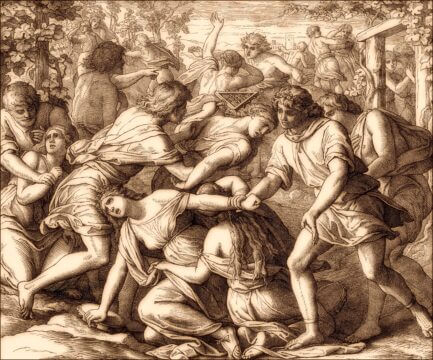
As the series has progressed the concept that God is good and great must be reconciled with his commands to put entire cities to death. The question is then more aptly stated, “Is God Guilty of Fraud?” These lessons and videos are part of a series: Is God Guilty of Fraud (formerly, The Greatness of God) – Mark Lanier, A trial lawyer by trade, examines the truth of God’s greatness by examining His Curriculum Vitae (CV). In consecutive lessons, Mark uses God’s CV to understand who He is, what his greatness has to do with us, why God has done horrible things and allows evil, what is the truth about God’s greatness, does God’s CV indicate that he keeps his promises and does God’s CV include references that back up the claim to His greatness? In consecutive lessons, he uses God’s CV to understand who He is what his greatness has to do with us why God has done horrible things and allows evil what is the truth about God’s greatness whether God’s CV indicate that he keeps his promises does God’s CV include references that back up the claim to His greatness For the YouTube Playlist of this series, go here. For the podcast, go here.
Generic placeholder

Recent Lessons

Showing 1441 - 1452 of 1517 Lessons
  • Church History

    CH04 Martyrdom

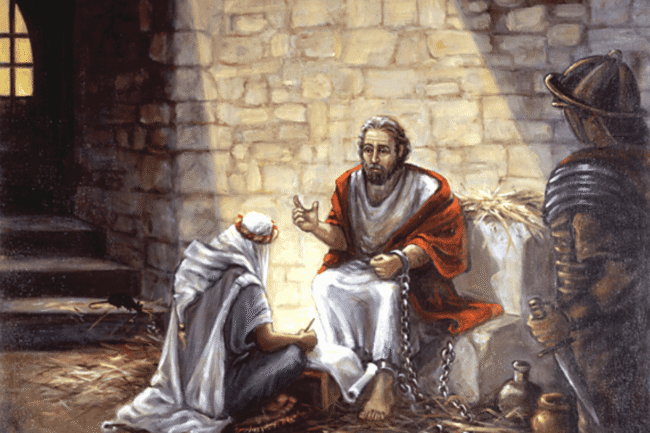
    Christian martyrdom was typically the end result of extreme persecution, which may have been rooted in three broad categories: Jewish persecution of the church – which was an extension of their hatred of Jesus; persecution that arose from local interests – where Christian moralities may have upset the local economy; and government sponsored persecution – […]
  • Church History

    CH05 Martyrs: Ignatius and Polycarp

    Ignatius of Antioch was the Bishop of the church at Antioch circa 110 AD. Typically Christians were charged with atheism because they would not worship Caesar as god and for this they were martyred. He wrote seven letters to the churches along his way from Antioch to Rome providing strong guidance in various Christian themes. […]
  • Church History

    CH06 Early Church Worship-Part 1

    Many New Testament churches met in homes of the wealthy because these homes would have had enough room to accommodate the larger groups. The earliest official “church building” was a converted house in Dura-Europos, Syria, which is dated to have been converted around 250AD. Although there is not a record of how a typical service […]
  • Church History

    CH06 Early Church Worship-Part 2

  • Church History

    CH07 Heresies: Gnosticism

  • Church History

    CH07 Heresies: Gnosticism Supplement

  • Church History

    CH08 Part 1 Trinity

    Chapter 8 – Part 1: The Trinity – Biblical Basis There is not an explicit reference in our Bible that states, “The LORD your God is one God who in His oneness exists as three persons, Father, Son and Holy Spirit.’ It would be more accurate to say that the Bible reflects and expresses the […]
  • Church History

    CH08 Part 2 Trinity

  • Church History

    CH09 Early Biblical Understanding

    Chapter 9 – Alexandria and Early Biblical Understanding Reading and understanding the Bible was challenging in the early Church as it is still today. When passages do not seem to make sense it opens up to interpretation. Many early leaders struggled with this and their writings shed some insight into prevalent thought. Philo, of Alexandria […]
  • Church History

    CH10 Origins of the Canon-Part 1

    Summary The ‘canon’, what we consider our Bible, is ultimately the collection of writings that the church uses as its measuring stick…the defining reference for Christian faith. Christianity has two general canons, the Catholic canon and the Protestant canon. The Catholic canon includes writings commonly called the ‘Apocrypha’. Our Old Testament is essentially the same […]
  • Church History

    CH10 Origins of the Canon-Part 2

    Summary Many early believers were martyred by the Romans and whatever ‘books’ they had…many early manuscripts for the New Testament…were burned. Nevertheless, we still have some original manuscripts that survived. Emperor Constantine (272-337) ordered Christianity as the the state religion of Rome. He ordered that copies of the New Testament be made to enable better […]
  • Church History

    CH10 Origins of the Canon-Part 3

    Chapter 10 – Part 3: “The Accuracy and Collection of the New Testament” Modern skeptics challenge that the New Testament is not an assembly of the true Scriptures, but reflect the spoils of victory for one group of beliefs that triumphed over others. The Nicene Creed, written during the First Council of Nicaea in 325 […]

Expand your Biblical Study, at the Lanier Theological Library